Why Trying to Make Travel Feel “Safe” Can Make Anxiety Worse

Updated: Sep 29
Author bio: Christine Leyva, Ph.D., is the founder of Brave Mind Therapy and a PSYPACT-certified licensed clinical psychologist with advanced training in clinical, social, and personality psychology. She specializes in evidence-based care for OCD, anxiety, health anxiety, chronic pain, and related concerns, with clinical experience across anxiety treatment, behavioral health, rehabilitation, and veterans’ health settings.
tl;dr: When flying or driving makes you anxious, it is natural to look for ways to feel safer. Some precautions are appropriate, but anxiety can also lead to behaviors such as avoiding highways, only traveling with another person, monitoring physical sensations, or arranging trips around the possibility of panic. These strategies may reduce anxiety temporarily while reinforcing the belief that travel is impossible to handle without them. At Brave Mind Therapy, I use cognitive behavioral therapy and gradual exposure to help people build confidence in their ability to travel even when some anxiety or uncertainty is present.
Travel anxiety often leads people to become very skilled at anticipating what could go wrong. Someone who fears driving may plan routes around highways, bridges, heavy traffic, or unfamiliar areas. Someone who fears flying may repeatedly check turbulence forecasts, select a particular seat, monitor the weather, or make sure another person is available throughout the trip. These strategies can feel practical because they make the immediate experience less uncomfortable.
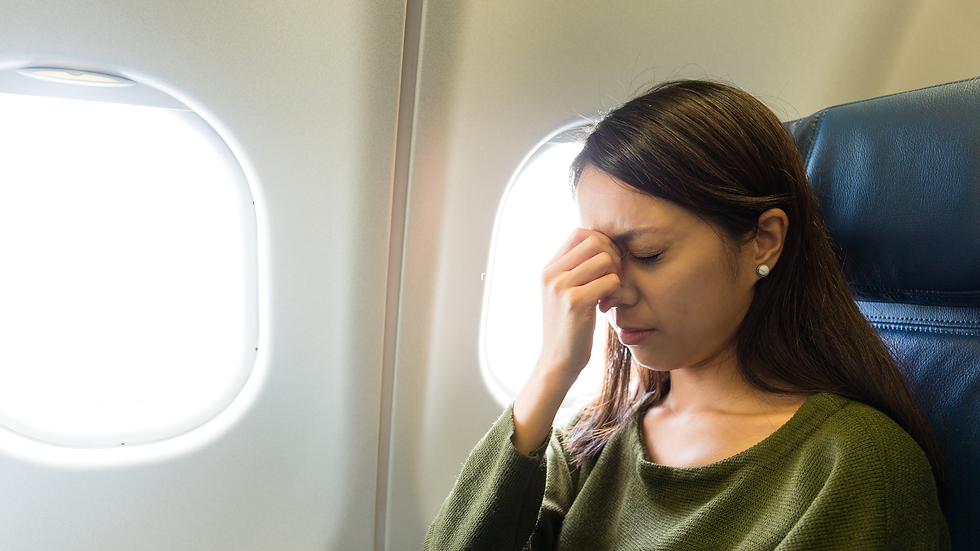
There is an important distinction, however, between taking reasonable safety precautions and organizing travel around anxiety. Wearing a seatbelt, following driving laws, responding appropriately to severe weather, and making normal travel plans are sensible behaviors. Anxiety-driven safety behaviors serve a different purpose: they are primarily designed to prevent uncomfortable sensations, uncertainty, or panic. When these behaviors become necessary conditions for traveling, they can unintentionally strengthen the fear they were meant to reduce.
Why safety behaviors can reinforce travel anxiety
Anxiety is influenced not only by what we think and feel, but also by how we respond to fear. If someone feels anxious about driving on the highway and consistently takes local roads instead, anxiety often decreases as soon as the highway is avoided. That relief is real, which is why avoidance can become so compelling. At the same time, the experience may reinforce the belief that avoiding the highway was necessary in order to remain safe or in control.
A similar process can occur with flying. Someone may begin to believe that they can only tolerate a flight if they sit near an exit, travel with a trusted person, continually monitor turbulence, or have a detailed strategy for managing anxiety. The person may successfully complete the flight, but attribute that success to the precaution rather than to their own ability to tolerate discomfort. Over time, confidence becomes increasingly dependent on having the right conditions in place.
At Brave Mind Therapy, I often help clients identify which behaviors are genuinely useful and which have gradually become part of the anxiety cycle. The question is not simply whether a strategy makes someone feel better in the moment. We also consider what the strategy may be teaching the person about their ability to cope without it.
How avoidance can make travel options increasingly limited
Fear of flying or driving often begins with a relatively specific concern but can expand over time. Someone who initially avoids one difficult highway may eventually avoid unfamiliar roads, bridges, heavy traffic, driving at night, or traveling alone. Someone uncomfortable with flying may begin choosing destinations based on flight length, avoiding connections, declining trips, or requiring another person to accompany them.
As these restrictions accumulate, anxiety begins influencing decisions beyond transportation itself. A person may decline a professional opportunity because of the commute, miss family events because they require air travel, or become dependent on a partner or relative for transportation. Travel may require increasingly elaborate preparation long before the actual trip begins.
This gradual narrowing is one reason I view treatment as more than helping someone complete one particular drive or flight. At Brave Mind Therapy, the broader goal is to help people regain flexibility. Driving and flying should become options that a person can evaluate based on where they want to go, rather than decisions determined primarily by fear.
Sometimes the fear is of having panic, not traveling
For many people, travel anxiety is not entirely about the airplane, highway, bridge, or traffic. The larger fear may be what will happen if anxiety becomes intense in a situation that feels difficult to leave. A person may worry about becoming dizzy while driving, experiencing a racing heart on an airplane, feeling trapped in traffic, or having a panic attack when immediate escape is not possible.
These concerns can lead to increased monitoring of physical sensations. Normal changes in heart rate, breathing, balance, temperature, or muscle tension may begin to feel significant because the person is watching for evidence that panic is beginning. Increased attention makes those sensations easier to notice, and interpreting them as threatening can increase anxiety further.
For this reason, treatment may need to address both the external situation and the person’s relationship with internal sensations. Learning facts about aviation or driving safety may be useful, but information alone may not resolve a fear centered on panic, loss of control, or uncertainty. Part of treatment involves learning that anxiety and physical sensations can be uncomfortable without automatically requiring escape or avoidance.
What gradual exposure is designed to teach
Exposure-based treatment is sometimes misunderstood as forcing someone into the situation they fear most. In practice, I use a gradual and planned approach that allows people to build experience at a manageable pace. Someone with driving anxiety might begin with familiar roads and gradually work toward busier traffic, unfamiliar routes, bridges, or highways. Treatment for flying anxiety can similarly involve a progression of experiences related to airports, airplanes, and eventually flying.
The purpose of exposure is not simply to endure anxiety until it disappears. It creates opportunities to learn something new about fear and coping. If someone drives on a highway while anxious and completes the experience without relying on their usual avoidance strategy, they begin gathering evidence that anxiety itself does not prevent them from functioning. Repeated experiences can gradually weaken the assumption that fear must be eliminated before travel is possible.
At Brave Mind Therapy, we also look carefully at safety behaviors during exposure. If someone completes a challenging drive but spends the entire time checking their heart rate, staying on the phone with another person, or searching for the nearest exit, those behaviors may continue reinforcing the idea that the situation could not have been managed otherwise. Treatment therefore focuses on gradually reducing unnecessary supports while maintaining appropriate real-world safety.
A successful trip does not have to be an anxiety-free trip
People with travel anxiety often measure success by how calm they feel. They may decide whether they are ready to drive based on their anxiety level or judge a flight according to whether they experienced physical symptoms. This can create another form of monitoring in which feeling calm becomes a prerequisite for doing something important.
I encourage clients to use a different measure. A successful experience may include experiencing anxiety, uncertainty, or uncomfortable physical sensations. What matters is whether the person was able to continue participating in the experience without allowing fear to determine every decision.
This shift is central to how I approach flying and driving fears at Brave Mind Therapy. The objective is not to guarantee that every trip will feel comfortable or predictable. It is to develop greater confidence that discomfort can occur without requiring someone to reorganize their life around avoiding it.
Building confidence means relying less on perfect conditions
Travel inevitably involves some uncertainty. Flights encounter turbulence and delays, roads become congested, plans change, and people sometimes feel anxious even when nothing dangerous is happening. Trying to eliminate every possible source of discomfort can make travel increasingly complicated while reinforcing the belief that uncertainty itself is intolerable.
Treatment offers a different path. Through cognitive behavioral therapy and gradual exposure, people can learn to distinguish practical preparation from anxiety-driven control, reduce avoidance, and become more comfortable responding to uncertainty as it occurs. Confidence develops not because every trip goes exactly as planned, but because the person learns they can adapt when it does not.
If fear of flying or driving is limiting where you go, requiring you to depend on other people, or making travel increasingly difficult, Brave Mind Therapy can help. I provide evidence-based treatment for flying and driving fears with the goal of helping people build greater independence, flexibility, and confidence in their ability to travel.
![[Quiz] How Bad is My Anxiety?](https://static.wixstatic.com/media/5b1cea_3bc0dee4f5114d0280e5585a8bf48997~mv2.png/v1/fill/w_980,h_544,al_c,q_90,usm_0.66_1.00_0.01,enc_avif,quality_auto/5b1cea_3bc0dee4f5114d0280e5585a8bf48997~mv2.png)


Comments